

A.SURYA PRAKASH
India has had a flurry of global leaders visiting New Delhi in recent months. Among top leaders who visited India in recent times are Russian leader Vladimir Putin, the French President Emmaneul Macron, the Brazilian President Lula da Silva and Ursula von der Leyen, chairperson of the European Commission. The President of Finland Alexander Stubb was the most recent visitor in the first week of March, 2026. All of them, in one voice, talk of India’s importance in ensuring global peace and in bringing about an amicable resolution of many conflicts.
Several global leaders have also been demanding that India must have a permanent seat in the United Nations Security Council. The Finland President said recently that India must have a seat in the Security Council. He said this was of utmost importance. Stubb also called for reform of the United Nations and other global institutions both in terms of membership and responsibilities.
Global institutions must be reformed to reflect today’s geopolitical realities he said and asserted that India will play a decisive role in shaping the new world order.
Although global leaders have over the past ten to 15 years expressed their views in regard to India being left out of the permanent membership of the Security Council, these voices have got louder after Narendra Modi became Prime Minister in 2014. They see him and with him, India as a key player. As Mr.Stubb noted, Modi’s speciality is his ability to keep steady relationships across the board. He significantly hailed India’s diplomatic skills and its ability to maintain relations with many sides. India is therefore one of the few countries “which can talk to anyone”.
India’s growing stature on the global stage can be gauged from Prime Minister Modi’s travels abroad and his meetings with key leaders as well. In the last few months he has visited Jordan, Ethiopia, Oman, South Africa, Malaysia, Bhutan and most recently Israel. In fact, soon after His visit to Israel ended (February 25 and 26), Israel and the USA decided to launch the war on Iran. It was as if they were waiting for Mr.Modi’s visit to end and his safe return to India before they decided to pull the trigger. During this visit, Israeli Prime Minister Benjamin Netanyahu hailed Modi’s leadership both within India and in the world. He described Modi as a”a great friend of Israel” and a great leader on the world stage. He invited Modi to address the Israeli parliament and described Modi’s speech as extraordinarily moving. “There wasn’t a dry eye left in Israel after your statement in the Knesset” he said.
One of the great acts of diplomacy by Prime Minister Narendra Modi is to firmly establish India’s relation with Israel which the Nehru-Gandhi family stubbornly resisted for many decades. Although the majority of Indians have friendly feelings with the jews, who constitute the majority in Israel, the Nehru-Gandhis never wanted friendly ties with the Jewish State because it would annoy their vote bank -the Muslims. As a result, India did not have diplomatic relations with Israel for many decades when Jawaharlal Nehru, India Gandhi and Rajiv Gandhi ruled the country. This family had thus allowed itself to be nose-led by the Muslim minority in regard to foreign policy although over 85 per cent of Indians, primarily Hindus, had cordial feelings towards the jews. Such was the animosity they had towards Israel that no prime minister had visited that nation until Modi did nine years ago. Prime Miniter Modi has corrected it during his tenure and both countries have much to benefit from this alliance. For India, this alliance will strengthen India’s defence capability because of its strategic partnership. Over one-third of Israel’s arms exports go to India. Israel is also inviting thousands of Indian workers. But credit must also go to former Prime Minister P.V.Narasimha Rao who ended Israel’s isolation by establishing formal diplomatic relations with that country after he became prime minister in 1992. Israel opened its diplomatic mission at that time in Le Meridien hotel in New Delhi.
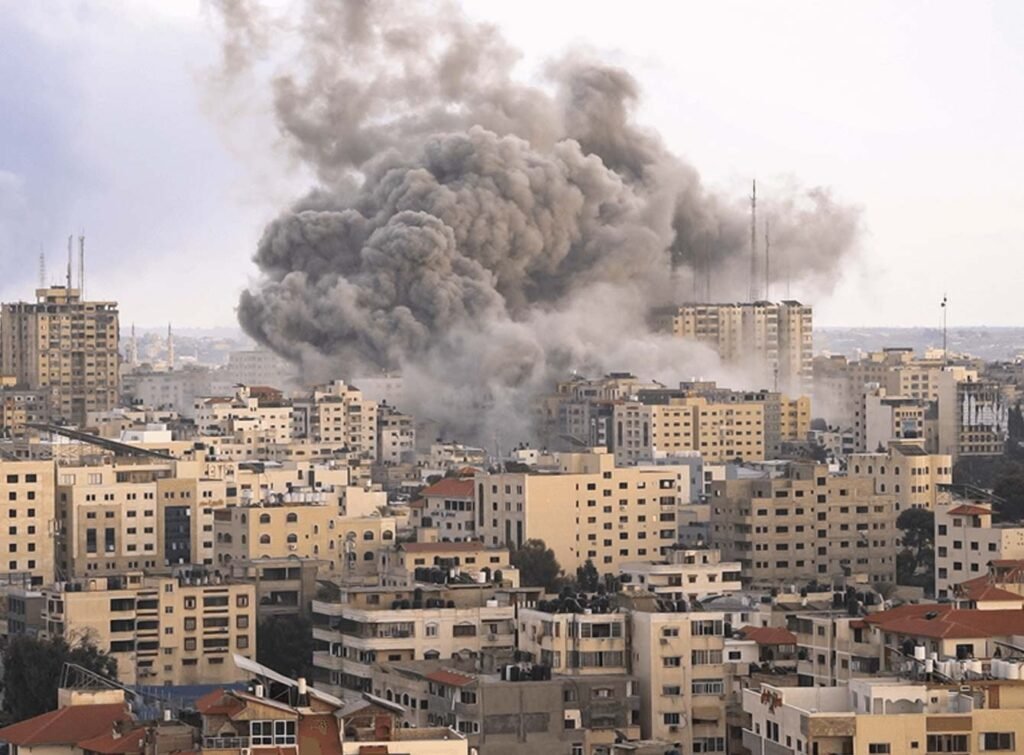
This brings us to India’s handling of the current war between the America-Israel on the one hand and Iran on the other. It is indeed most unfortunate that the middle east and the Arab world is ridden in conflict for centuries. For long years, most of the Islamic nations in that region were ranged against Israel and America. America, while siding with Israel, played politics in the region, promoting many terrorist organisations to fight the Soviet Union and its “enemies” at any given juncture.
Consequent to America’s attack on Iran, shipping through the Strait of Hormuz has been severely affected because the insurance companies are unwilling to insure ships crossing the Strait. This has affected oil exporters in the entire gulf including Saudi Arabia, UAE, Qatar, Kuwait, Iraq and Iran itself. Since ships are not transiting through Hormuz, Iran’s oil exports are severely hit and will affect its economy and war effort.
Meanwhile, under Modi, India has cleverly diversified its oil imports – from the gulf countries, Iran and Iraq to Russia. India imports 85 per cent of its oil requirement and will have to step up imports from Russia.
When Iranian missiles struck Saudi Arabia, UAE, Qatar, Oman and Bahrain, India condemned these attacks. Soon thereafter, Narendra Modi spoke to leaders in Saudi Arabia and Bahrain and said India strongly disapproved such targeting of gulf nations by Iran. He also spoke to the Israeli prime minister Netanyahu and King Abdullah of Jordan. India has said it is deeply concerned over the escalation of conflict and advised retraint.
This is indeed amazing diplomacy. While India maintains strong ties with the gulf nations where over 9 lakhs Indians earn their livelihood, it has strengthened its ties with Israel, which for decades has been at loggerheads with these Islamic nations. Strange as it may seem, in the current war in the Arab world, one sees Israel and most of the Islamic nations ruled by Sunni leaders on the same side of the fence after Iran’s missile strikes. Thus, Narendra Modi has ensured that India’s ties with Israel does not jeopardise its relations with the Arab states. Whether as a consequence of India’s diplomacy or otherwise, Iran’s interim leader has “apologised” to the Arab nations hit by its missiles and said Iran will not strike unless it is hit by a country.
Side by side, India has not completely abandoned Iran. Given its old ties with Iran, India condoled the death of Iranian leader Al Khamenei who was killed in a joint US-Israel missile strike. India’s foreign Secretary Vikram Misri signed the condolence book on behalf of the Indian government at the Iranian embassy in New Delhi. Also, the External Affairs Minister Dr.Jaishankar held a telephonic talk with the Iranian foreign minister. India also carried out its humanitarian responsibilities when it responded to distress signals from an Iranian ship hit by an American submarine. Around the same time, it granted permission for another Iranian ship to dock at Cochin due to the on-going conflict.
Finally, here comes the clincher. In the last quarter of 2025, the American President Donald Trump was thumping his chest and threantening India with 25 per cent punitive sanctions if it continued to buy Russia oil. After India clinched the trade pact with the European Union, the U.S, toned down its rhetoric and quickly wrapped up a deal with India. Now, India’s brilliant diplomatic moves have made America soften its approach towards India. It has now announced that India can buy Russian oil that is on international waters in order to ease supplies. The U.S Treasury Secretary Scott Bessent claimed that later India would substitute Russian oil with American oil but to ease the temporary gap of oil around the world, India could continue its purchases for the next one month.
This is indeed the icing on the cake and a fitting response to opposition leaders who were accusing Modi of having surrendered to the Americans.
